AI agent fleet operations guide · 2026
What Is an AI Agent Fleet?
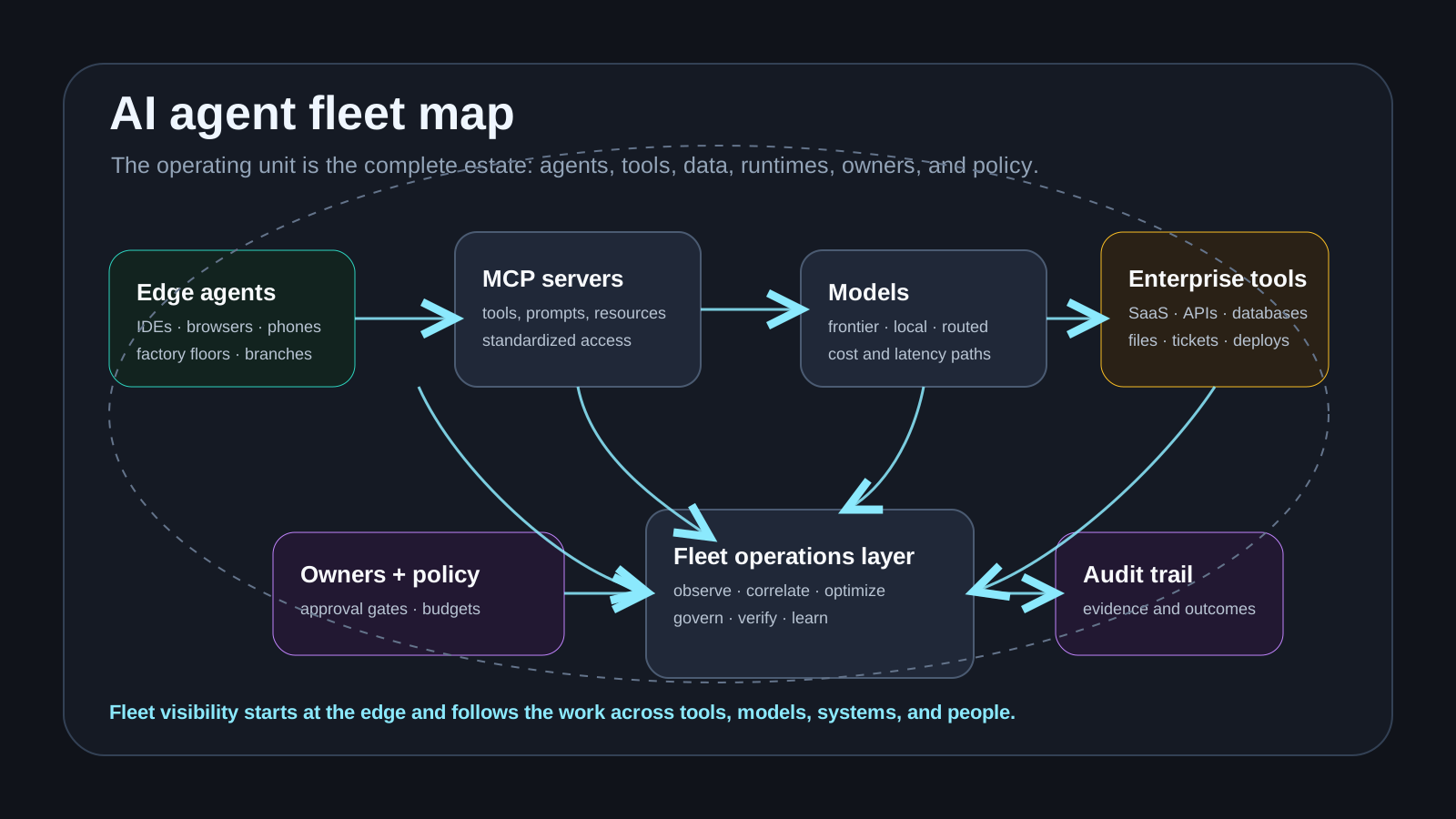
An AI agent fleet is the full operating estate of agents, models, MCP servers, tools, devices, owners, policies, telemetry, and runtime infrastructure that an organization must observe, govern, and optimize as one system.
Short answer
An AI agent fleet is not just a collection of chatbots. It is the complete, changing estate of agentic systems that can reason, call tools, access data, incur cost, and take action across an enterprise. Fleet operations is the discipline of making that estate visible, accountable, secure, and continuously improvable.
AI agent fleet definition
An AI agent fleet is the population of AI agents an organization operates, plus the models, clients, devices, MCP servers, tools, APIs, databases, identity systems, policies, and observability pipelines those agents depend on. The word fleet matters because agents rarely stay inside one product boundary. They move across users, teams, tools, runtimes, and data systems.
The Model Context Protocol describes MCP as an open standard for connecting AI applications to external systems such as data sources, tools, and workflows. That unlocks useful automation, but it also creates a larger operating surface. Once agents can call tools, retrieve records, open tickets, draft code, or touch business workflows, they need fleet-level visibility.
What an AI agent fleet includes
A practical fleet inventory should cover seven layers:
- Agents and copilots: internal assistants, coding agents, support bots, embedded workflows, and edge agents.
- Models: frontier, local, fine-tuned, routed, embedding, and evaluation models.
- MCP servers and tools: the interfaces agents use to read data and change systems.
- Data systems: files, databases, CRMs, calendars, tickets, observability tools, and knowledge bases.
- Runtimes: cloud, private, hybrid, browser, IDE, mobile, laptop, and edge environments.
- People and policy: owners, approvers, budgets, permissions, exceptions, and escalation paths.
- Telemetry: traces, tool calls, model requests, latency, errors, cost, data-flow metadata, approvals, and outcomes.
That inventory is not bureaucracy. It is how teams prevent agent sprawl from becoming ungoverned automation.
Why AI agent fleet operations are hard
Traditional monitoring asks, “Is this service up?” AI agent fleet operations asks, “Can we see, govern, optimize, and verify what agents are doing across the enterprise?” Server logs alone often miss the initiating user, device, local client, MCP server, tool permission, model route, or human approval that shaped an action.
This is why server APM is not enough for agent fleets. The first important event may happen at the client edge: inside an IDE, a browser extension, a phone, a plant device, or a private desktop agent. If telemetry starts only at a backend gateway, teams lose the context needed for security, reliability, cost attribution, and incident review.
From observability to fleet operations
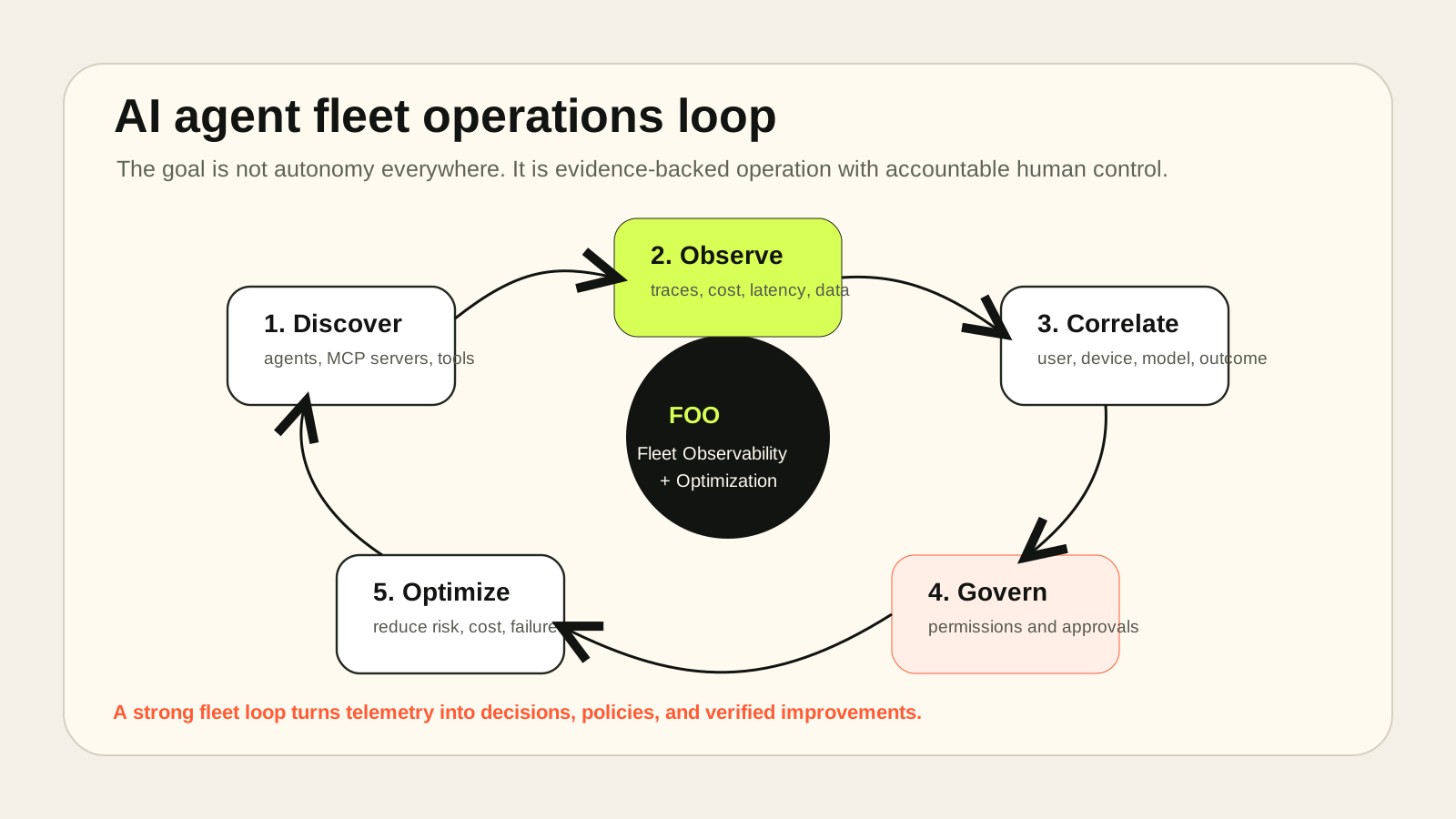
Observability is the foundation, not the finish line. A strong fleet loop starts by discovering agents, MCP servers, tools, and data connections—including shadow systems. It then observes traces, tool calls, model usage, failures, latency, cost, and data-flow metadata. Next, it correlates those events to the user, device, workflow, owner, model, downstream system, and business outcome.
Governance adds the controls: least privilege, approval gates, budget limits, retention rules, and clear accountability. Optimization uses the evidence to reduce failed calls, slow workflows, duplicate agents, risky tools, and unnecessary model spend. NIST’s AI Risk Management Framework frames AI risk management around trustworthy design, development, use, and evaluation; for fleets, those principles need to appear in runtime telemetry and post-action verification, not only in policy documents.
Standards make the fleet operable
Vendor-neutral telemetry is becoming essential. OpenTelemetry’s GenAI semantic conventions now cover generative AI and MCP work, creating a path to correlate agent, model, tool, and backend behavior. For an enterprise fleet, that means traces can link edge activity to downstream services rather than leaving each layer as a separate dashboard.
AxLoop’s view is local-first and standards-based: preserve client-edge context, redact sensitive data early, federate telemetry where needed, and integrate with existing observability. Learn more in our local-first AI agent fleet architecture and MCP tool-call observability guides.
AI agent fleet examples
A software company might run coding agents in IDEs, support agents in a help center, sales agents in a CRM, and operations agents connected to cloud infrastructure. A manufacturer might run local agents on plant devices, private models for sensitive documents, and cloud agents for planning. A financial services team might allow agents to retrieve records, summarize cases, draft responses, and recommend next steps. In every case, the fleet is larger than the agent UI. It includes the tools, data, devices, controls, and evidence trail behind each action.
How to evaluate an AI agent fleet platform
Ask these questions before choosing a fleet operations layer:
- Does visibility start at the client edge, or only after requests reach a server?
- Can it inventory agents, MCP servers, tools, owners, policies, and dependencies?
- Can it connect model calls to tool calls, downstream systems, cost, latency, and outcomes?
- Does it support redaction, data minimization, customer-controlled deployment, and audit trails?
- Can it help optimize reliability and cost, not just display traces?
The best starting point is not a giant migration. Start with inventory, telemetry, and control points. Then use fleet evidence to improve safety, reliability, cost, and business outcomes over time.
FAQ: AI agent fleets
What is an AI agent fleet?
An AI agent fleet is the complete estate of AI agents and the models, tools, MCP servers, data systems, devices, runtimes, owners, policies, and telemetry needed to operate them safely.
How is an AI agent fleet different from a multi-agent system?
A multi-agent system describes how agents cooperate architecturally. An AI agent fleet describes the operating estate across users, devices, runtimes, tools, ownership, policy, cost, security, and reliability.
Why is server-side APM not enough for AI agent fleets?
Server-side APM often starts after the request reaches backend infrastructure. AI agent fleets also need client-edge context: the initiating agent, user, device, MCP server, tool, model, permission, and outcome.
What should AI agent fleet telemetry capture?
Fleet telemetry should capture traces, tool calls, model requests, cost, latency, data-flow metadata, failures, owners, approvals, and verified outcomes while minimizing sensitive content.
See your fleet before it manages you.
AxLoop is building Fleet Observability and Optimization for distributed enterprise AI agents, MCP servers, tools, and edge runtimes.
Request early access